
Tips for improving your wellbeing
There are lots of small actions which we can incorporate into our daily lives which can help to improve our wellbeing. Below are a number of tips, based on the 5 Way to Wellbeing, to help you get started.
1. Relaxing and Reducing Stress
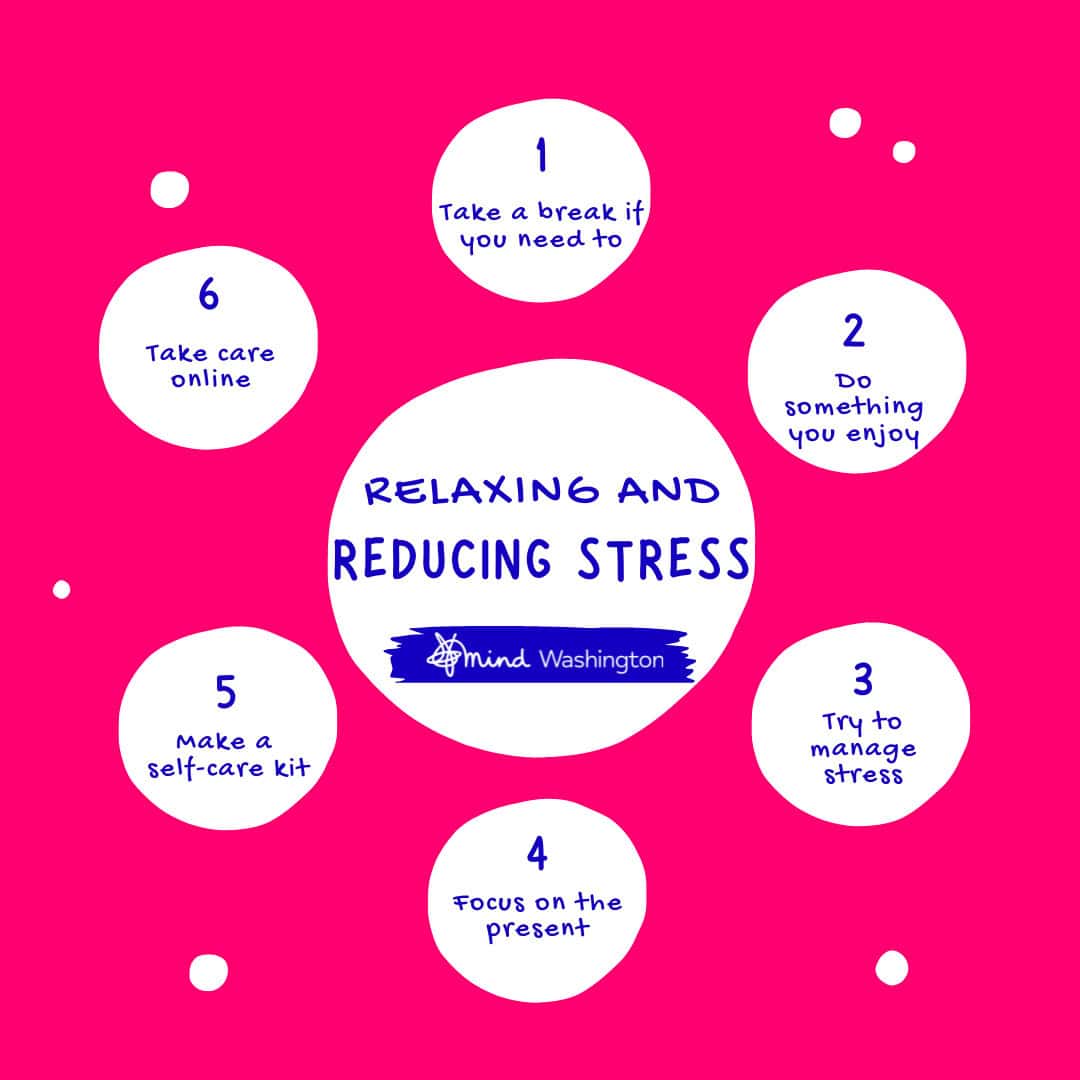
Exploring relaxation can help you look after yourself when you’re feeling stressed or worried. Relaxation might not make what you are stressed or worried about go away. But it can give you a mental break from these feelings and help you refocus. You could get started by:
- Taking a break if you need to
- Doing something you enjoy
- Trying to manage stress
- Focusing on the present
- Making a self-care kit
- Taking care online
Click here for more information on relaxing and reducing stress from Mind. Did you know that here at Washington Mind we offer a range of holistic sessions which can help you to relax and reduce stress? Sessions include; Sound Bath, Mindfulness & Meditation and Baby Massage. Click here to find out more about the sessions and to book.
2. Find ways to learn and be creative
The 5 Ways to Wellbeing are 5 daily actions which have been shown to help improve wellbeing when incorporated into our daily lives. One of the 5 Ways to Wellbeing is to ‘Keep Learning’, whether this is by signing up to a new course, online learning, or perhaps trying a new hobby. Art and the exploration of our creativity can also be a powerful mindfulness tool that helps people relax and unwind, process our emotions, and manage mental health conditions such as anxiety, trauma, and depression. By trying to introduce both learning and creativity into our lives, we can help to improve our wellbeing. You could get started by:
- Joining a class or group
- Trying online learning
- Trying to do something creative
Click here for more information on finding ways to learn and be creative from Mind. Did you know that here at Washington Mind we run a range of social support groups which can help you to learn new skills or be creative? Groups such as Dough Bros, Lunch & Learn, Creative Minds, Knit & Natter and our Gardening Group can not only help you to learn new skills, but also explore your creativity. Click here to find out more about our groups, and find out how you can come along.
3. Spend time in nature
Spending time in green space or bringing nature into your everyday life can benefit both your mental and physical wellbeing. For example, doing things like growing food or flowers, exercising outdoors or being around animals can have lots of positive effects. You could try:
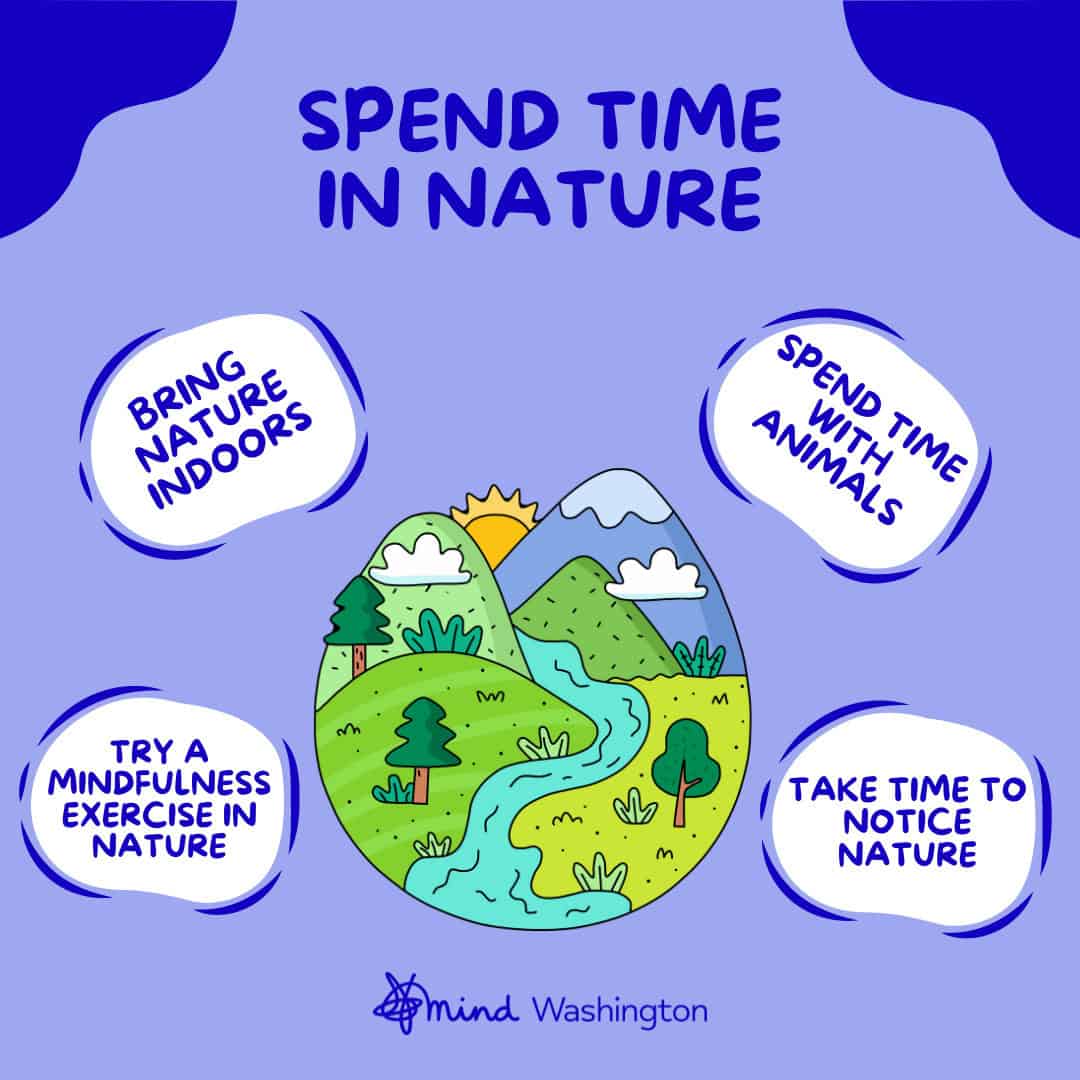
- Bringing nature indoors
- Spending time with animals
- Taking time to notice nature
- Trying a mindfulness exercise in nature
Click here for more information on spending time in nature from Mind. You can also find tips on connecting with nature by clicking here to visit the Mental Health Foundation website.
Connect with nature at Washington Mind’s Social Support Groups! We run weekly walking groups and peer-support gardening groups, and a monthly Pet Therapy group, all of which provide opportunities to spend time in, and appreciate nature. Click here to find out more about our groups, and how you can come along.
4. Connect with others
The 5 Ways to Wellbeing are 5 daily actions which have been shown to help improve wellbeing when incorporated into our daily lives. One of the 5 Ways to Wellbeing is: Connect. Connecting with others can help us feel close to people, and valued for who we are. Being social means different things for different people – you might prefer being in quieter situations with one other person, or you might like being in big groups. You could try:
- Talking to someone you trust
- Peer support
- Finding ways to make a difference such as random acts of kindness
- Volunteering which also fits into another one of the 5 Ways to Wellbeing – Give
Click here for more information on connecting with others from Mind.
Here at Washington Mind, we have a number of peer support groups including; Gardening Group, Company & Support, Woman Space, Man Space, Dough Bros and all of our Social Support Groups offer spaces to meet new people and connect! Click here to find out more about the groups and how you can attend.
We also have a number of volunteering roles across our projects here at Washington Mind, click here to find out more about getting involved.
5. Look after your physical health
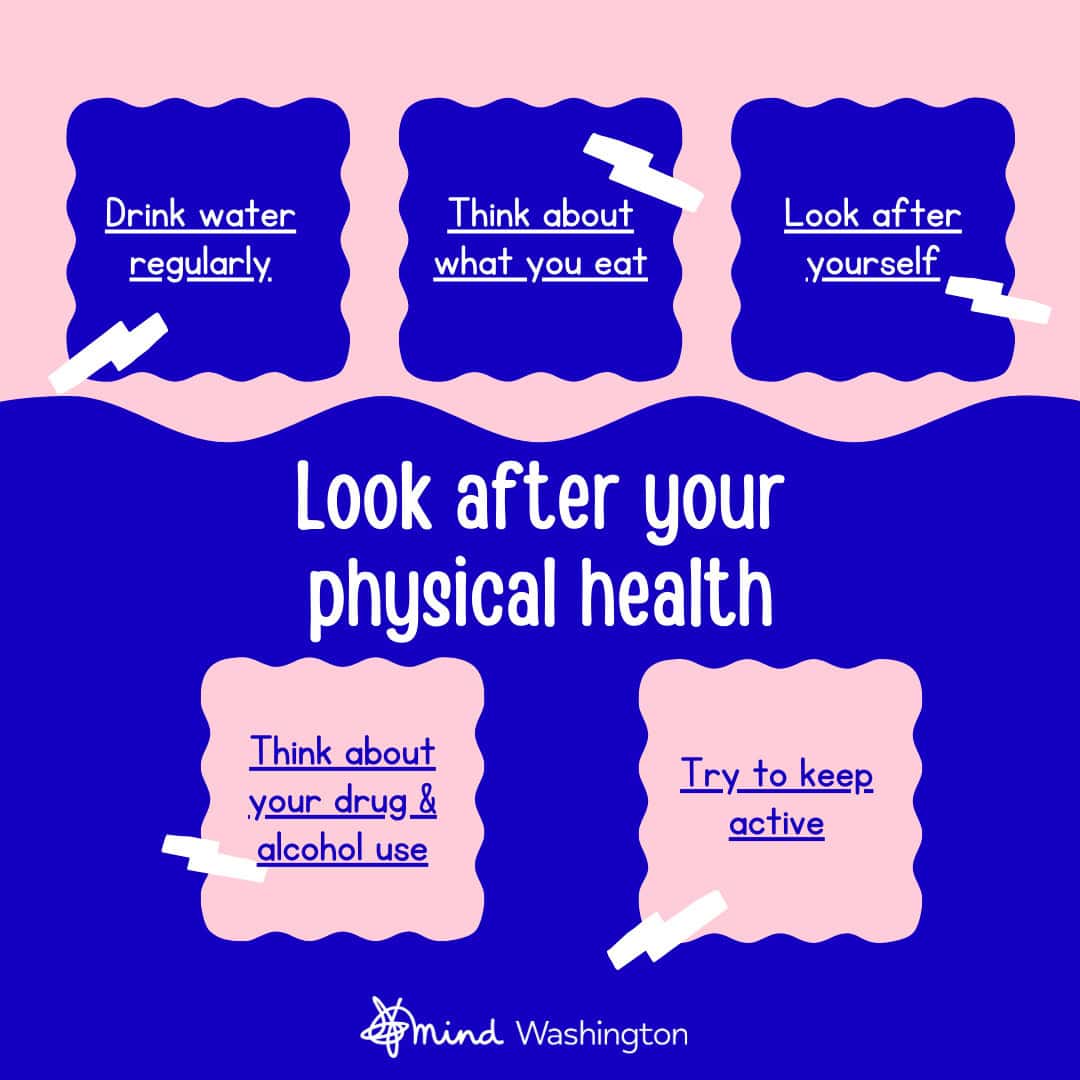
Taking care of our physical health can have a positive impact on our mental health and wellbeing. Physical health problems significantly increase our risk of developing mental health problems, and vice versa. Having a mental health problem doesn’t mean it’s inevitable that you will develop a physical health problem. There are things you can do to give yourself the best chance of staying physically well. You could get started by:
- Drinking water regularly
- Thinking about what you eat
- Looking after yourself
- Thinking about your drug & alcohol use
- Trying to keep active
Click here for more information on looking after your physical health from Mind.
If you’re looking for ways to stay active, we run a weekly gardening group and a walking group here at The Life House, click here to find out about them. We also run a number of fitness classes such as Megs Moves Dance Fitness, Hatha Flow Yoga with Flow2Sow Yoga and Yoga for Menopause. Click here to find out more and to book onto an upcoming session.
6. Try to improve your sleep
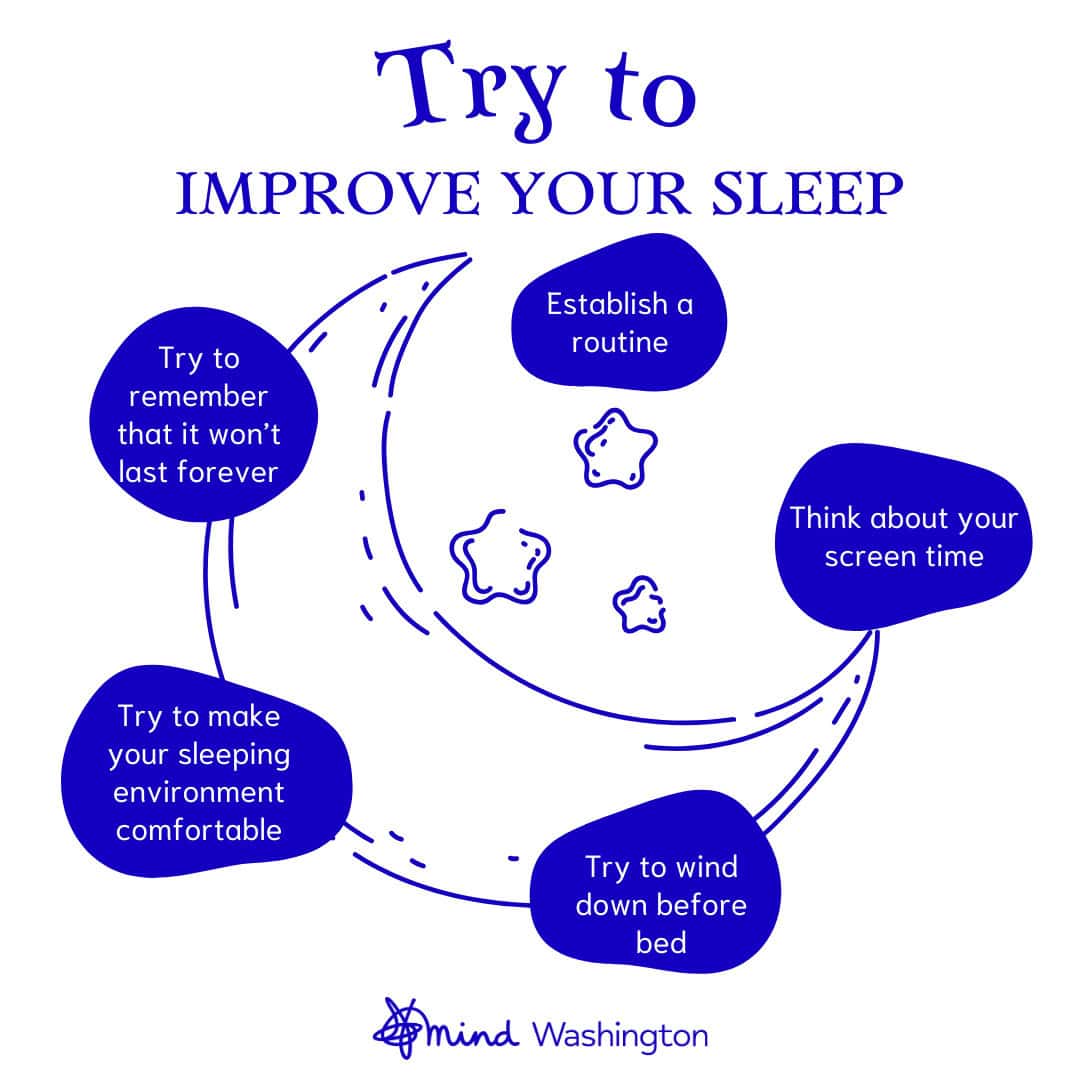
How well we sleep can impact our wellbeing. And if we’re struggling with our mental health, this can affect our sleep. Everyone’s sleep patterns are different, and it’s important to do what works for you. But here are some ideas you could try:
- Establish a routine
- Think about your screen time
- Try to wind down before bed
- Try to make your sleeping environment comfortable
- Try to remember that it won’t last forever
Click here for more information on trying to get enough sleep from Mind. Or click here for information on how to sleep better from the Mental Health Foundation.
We also offer a therapeutic group here at Washington Mind to help improve sleep problems and insomnia. Click here to find out more.
7. Resilience
Being prepared for periods of stress can make it easier to get through them. And knowing how to manage our wellbeing can help us recover after a stressful event. Some of us may refer to our ability to manage stress as our resilience.
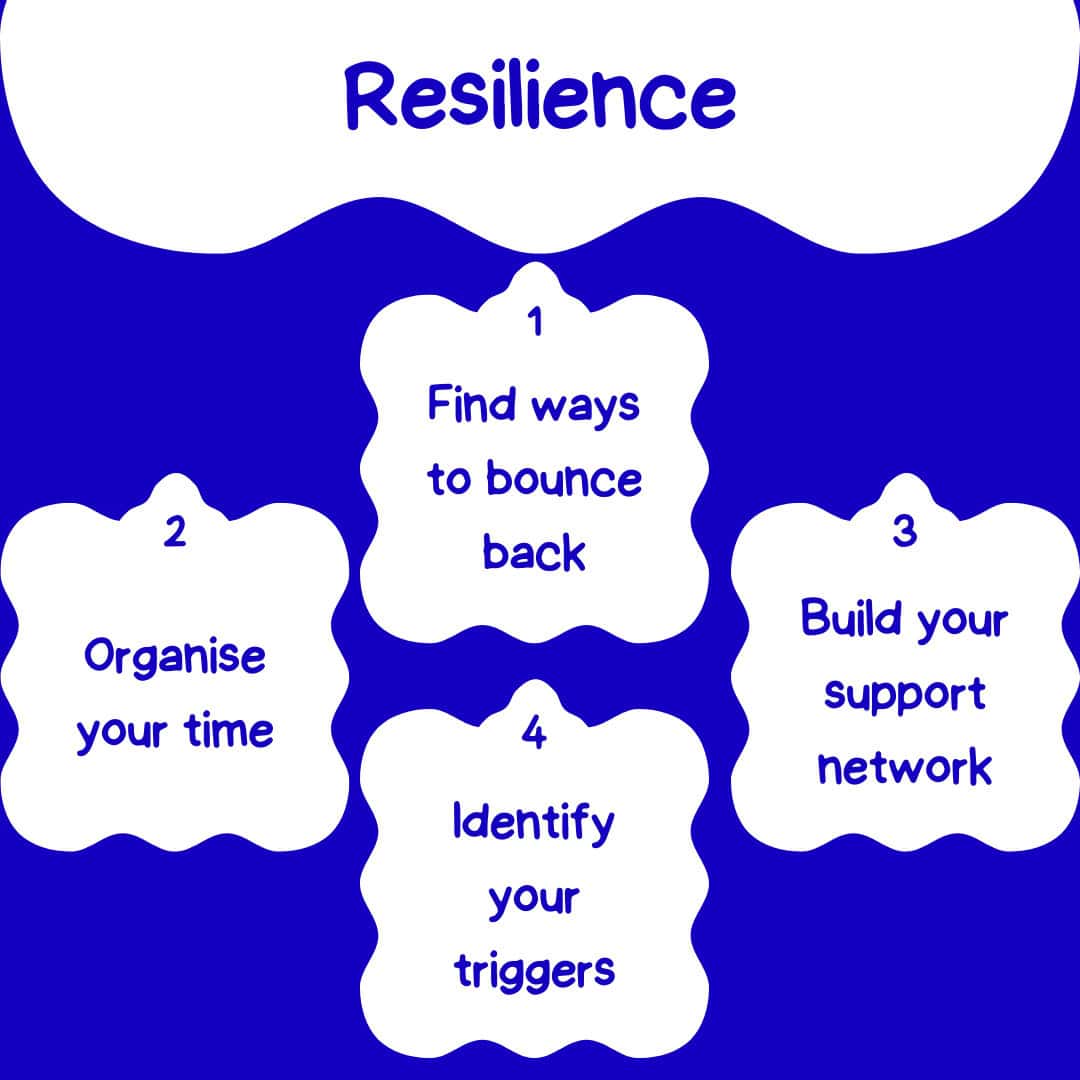
There are things we can try to build our resilience against stress, such as
- Find ways to bounce back
- Build your support network
- Identify your triggers
- Organise your time
Click here for more information on managing stress and building resilience from Mind. Or click here for information from the NHS’s Better Health: Every Mind Matters on bouncing back from life’s challenges.
If you’re looking to build your own resilience, or support the people around you, we currently offer two courses which you might find useful:
- Investing in You: Emotional Resilience
- Building Resilience in the Workplace
Click here to find out more and to book your place.
8. Be kind to yourself and others
There’s been lots of research about the effects of taking part in social and community life. Some studies have shown that people who help others are more likely to rate themselves as happy. One of the 5 Ways to Wellbeing is to ‘Give’ and one way in which we can incorporate random acts of kindness into our day. But it is just as important to be kind to ourselves as it is to others, try to tune out the voice of judgement and comparison and tune in to the voice that says you are enough. Some ways to introduce more kindness into your day include:
- Do small acts of kindness
- Be compassionate
- Be kind to yourself
Click here to read more about kindness in the Kindness Matters Guide from the Mental Health Foundation.
You can find lots of inspiration for completing random acts of kindness on the Random Acts of Kindness Foundation website by clicking here.
Action for Happiness have lots of information on their website about being kind to others, and looking after ourselves, and they publish a calendar each month with daily actions for how you can improve your wellbeing, and that of those around you. Click here to visit their website.
9. Find time for yourself
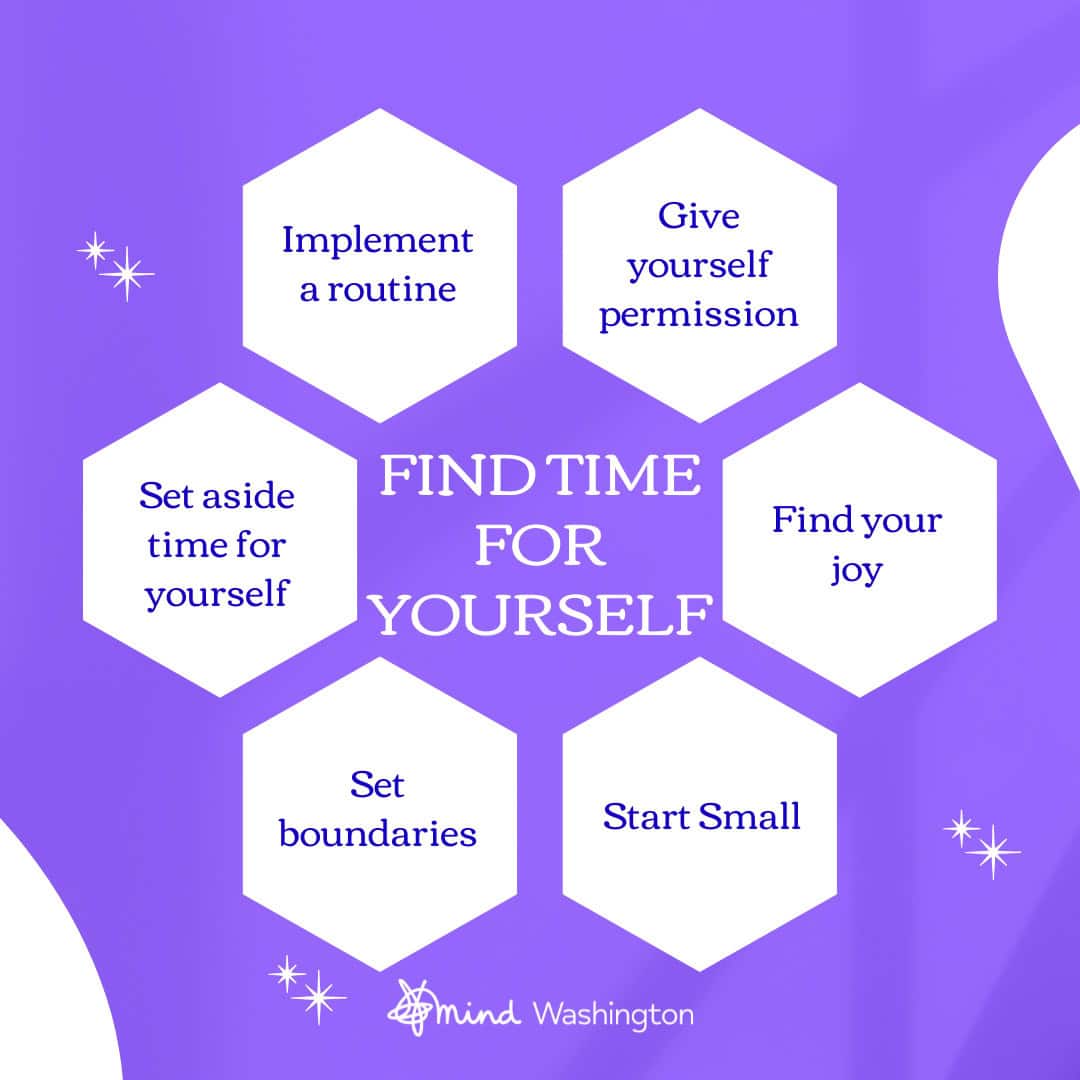
Focusing on yourself means establishing a relationship with yourself that’s as caring and attentive as the relationships you have with others. It’s giving yourself permission to put your needs first, and can go beyond relaxation. Here are some tips to help you get started:
- Give yourself permission
- Find your joy
- Start small
- Set boundaries
- Set aside time for yourself
- Implement a routine
Click here for more information on how to focus on yourself, and the benefits of doing so, from Calm.
Click here for self-care tips for mental health problems from Mind.
Looking for one to one support around your mental health?
Listening Ear
Washington Mind’s Listening Ear service is here for anyone in the Sunderland, Washington or Coalfields area who needs confidential emotional support. Whether you’re feeling overwhelmed, isolated, or simply need someone to talk to, our trained practitioners are here to listen and help you take the next steps toward improved wellbeing.
This is not a counselling or crisis service, but a safe space to talk openly, share what’s on your mind, and feel heard without judgement.
Our Listening Ear service offers short-term, person-centred emotional and practical support for individuals who may be struggling with their mental health or overall wellbeing. Our aim is to listen, support, and empower you to develop coping strategies, access helpful resources, and move toward improved wellbeing.
Click here for more information about our Listening Ear service and to access support.
Counselling
Washington Mind offers 1-1 Person Centred Counselling which is a Humanistic Approach, based upon the view that everyone has the capacity and desire for personal growth and change given the right conditions.
Click here to find out more about our counselling service for adults and young people aged 11+.


